

Mò Yá Low-Caf Red
- Regular price
-
£53.00 - Regular price
-
- Sale price
-
£53.00
Tax included.
Shipping calculated at checkout.
Couldn't load pickup availability
Mò Yá Low-Caf Red
Naturally Low-Caffeine Wild Red Tea from Ancient Forest Tea Trees, Guizhou
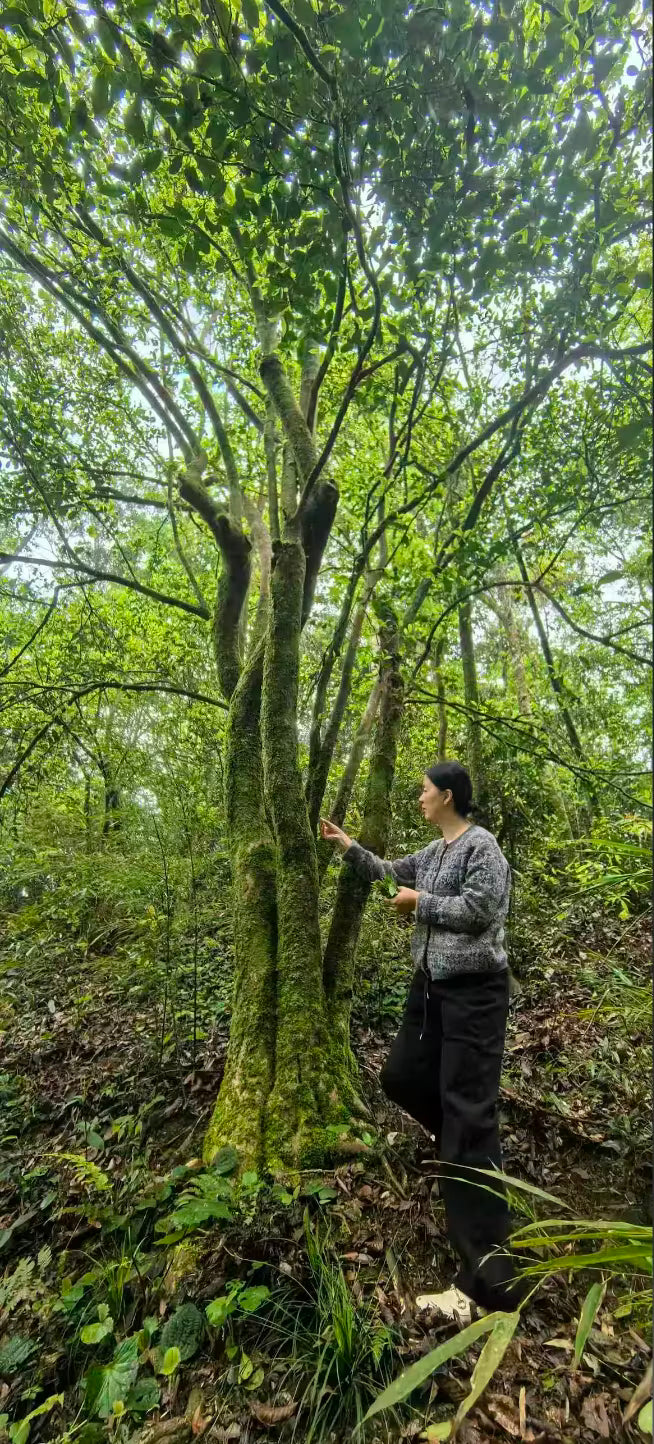
Mò Yá (默芽), or Silent Bud, is a naturally low-caffeine Wild Red Tea made from ancient tea trees growing freely in a remote forest in Guizhou.
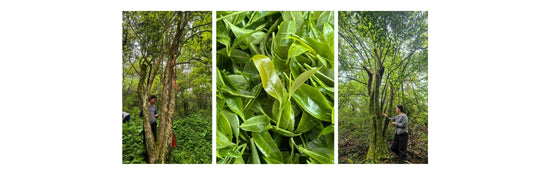
Unlike herbal teas or caffeine-free infusions, Mò Yá is made from true tea leaves, foraged from a distinctive population of wild, ancient and indigenous tea trees that lie between the small-leaf Camellia sinensis type and the large-leaf Assam variety, C. sinensis var. assamica. Through ongoing research within this forest, individual ancient tea trees have been identified whose leaves naturally contain around 0.01–0.1% caffeine (compared with around 3–4% typically found in the young shoots used for premium loose-leaf tea), while retaining the depth, sweetness and endurance we look for in exceptional tea.
Made into Red Tea, Mò Yá is remarkably smooth and gentle, with notes of cherry, almond and wildflowers, followed by a lingering sweetness that continues through more than fifteen infusions. For those who enjoy Gong Fu Cha or an intentional tea ritual but prefer a gentler cup in the evening or during meditation, or who simply wish to reduce their caffeine intake without sacrificing the complexity of exceptional tea, Mò Yá offers a rare experience. This first release comes from the first pluck these trees have given in several years, and we intend to keep future harvests intentionally small, so that the forest and its natural rhythms will remain undisturbed.
桃李不言,下自成蹊。
The peach and plum trees do not speak, yet a path forms beneath them.
This ancient Chinese saying, recorded by Sima Qian more than two thousand years ago, feels equally fitting for the path by which Mò Yá gradually revealed itself.
For many years, our friend Hai You and the tea master have worked together making some of China's most treasured teas for formal occasions and private collections. It was through years of walking this forest, harvesting leaves and making tea together that they first noticed something unusual about certain wild tea trees.
What began as an observation has since become ongoing research. Tree by tree, Hai You has been identifying those that are naturally low in caffeine, documenting their characteristics and gradually mapping them across the forest. The work continues today, deepening our understanding of this remarkable landscape and the diversity it holds.
This spring, with the help of the village and some of its most experienced tree climbers, we were able to forage a small first-pluck harvest from a selection of these trees. Under the tea master's guidance, those leaves became the first release of Mò Yá.
We have chosen not to disclose the precise location of this forest, nor the name of the tea master. Over the years, we have witnessed countless areas transformed by waves of commercial interest, exploitation and changing market forces. When demand outpaces stewardship, it is often the ecosystems, local communities and cultural traditions that bear the greatest cost. We hope to avoid contributing to this devastating cause, allowing both the forest and the people who care for it to continue on their own terms.
Yet protecting a place does not mean keeping it to ourselves. Quite the opposite. We believe extraordinary teas deserve to be recognised and valued by the people who truly appreciate them. In recent years, China's market for exceptional, traditionally crafted teas has changed dramatically. As demand from hospitality and gifting has declined, many small-scale makers of ancient-tree and traditionally handcrafted teas have found it increasingly difficult to find people who recognise the value of their work. Today, many continue their work while questioning whether generations of knowledge and craftsmanship still have a place in the modern world. By connecting Mò Yá with the tea drinkers and tea houses who will truly value it, we hope not only to support livelihoods, but also to affirm that this work matters—that careful stewardship, patience and exceptional craftsmanship are still recognised, cherished and worth continuing.
Thank you for being part of continuing this story. Your curiosity, appreciation and support truly help ensure that remarkable forests like this, and the people who care for them, continue to be recognised for generations to come.
Taste Profile
Fruity, Nutty, Smooth, and Sweet
Feel
Health Benefits
Season
Indigenous Tree Type
Tree Age
Habitat
Elevation
Cultural Significance
What's so special about this tea?