

Mò Yá Low-Caf Green
- Regular price
-
£53.00 - Regular price
-
- Sale price
-
£53.00
Tax included.
Shipping calculated at checkout.
Couldn't load pickup availability
Mò Yá Low-Caf Green
Naturally Low-Caffeine Wild Green Tea from Ancient Forest Tea Trees, Guizhou
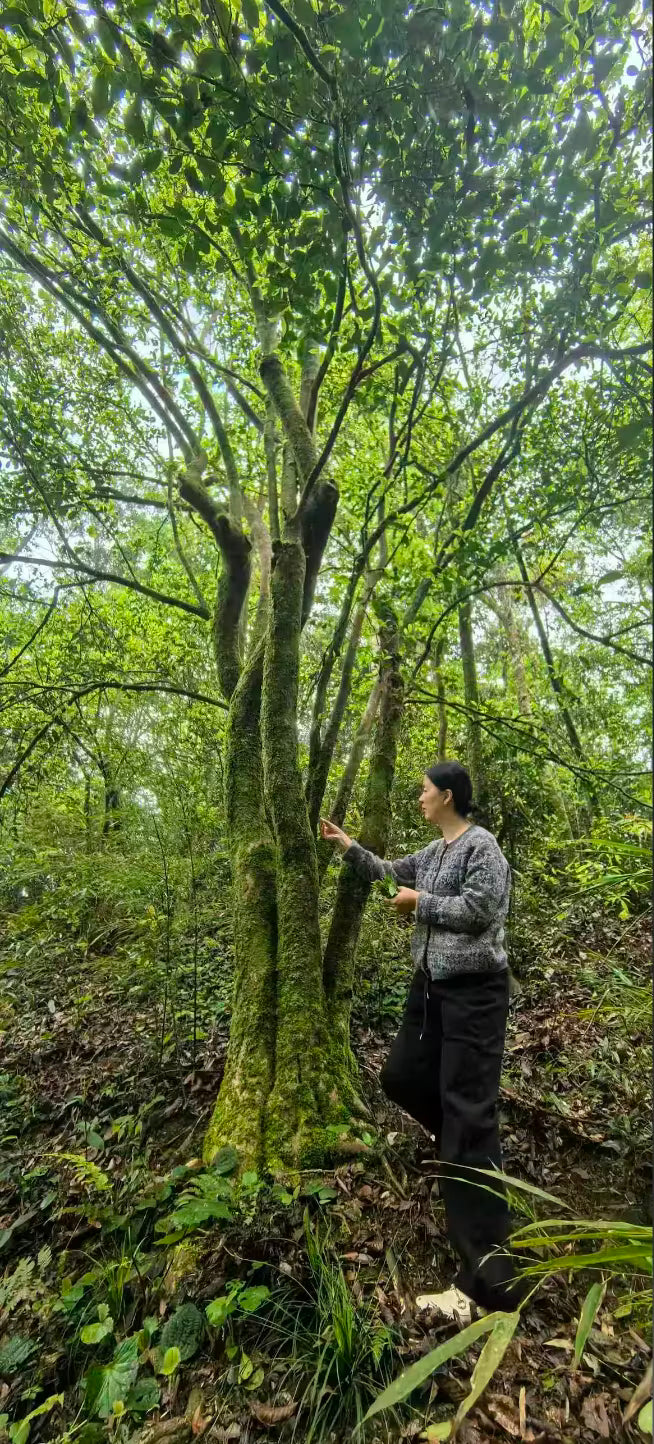
Mò Yá (默芽), or Silent Bud, is a family of naturally low-caffeine teas made from a distinctive population of wild, ancient and indigenous tea trees growing in a remote forest in Guizhou. Naturally containing just 0.01–0.1% caffeine, these remarkable leaves offer a rare alternative for those seeking a low-caffeine Green Tea without leaving behind the depth, complexity and endurance of fine loose-leaf tea. Following our first Mò Yá Red, this new Green Tea reveals an entirely different expression of the same forest leaves.
Unlike herbal teas or caffeine-free infusions, Mò Yá comes from true tea leaves, foraged from trees that lie between the small-leaf Camellia sinensis type and the large-leaf Assam variety, C. sinensis var. assamica. Through ongoing research within this forest, individual ancient tea trees have been identified whose leaves naturally contain around 0.01–0.1% caffeine (compared with around 3–4% typically found in the young shoots used for premium loose-leaf tea), while retaining the depth, sweetness and endurance we look for in exceptional tea.
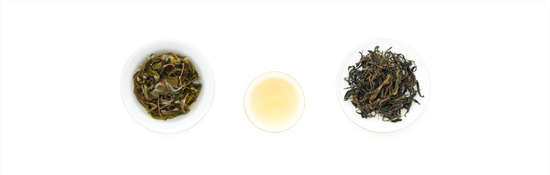
Made into Green Tea, Mò Yá is one of the most distinctive teas we have tasted. Its defining quality is an extraordinary purity, reminiscent of drinking cold spring water high in the mountains: crisp, mineral and deeply refreshing, with a gentle sweetness that seems to come from the water itself. Subtle notes of fresh apple and sweet almond emerge alongside wet rock and layers of fragrance like wild meadows, while a quiet spectrum of flavours reminiscent of raw Pu’er gradually appears through the infusions. The tea feels almost introverted, revealing itself quietly to those who pay attention, yet carrying an immense presence within its gentleness.
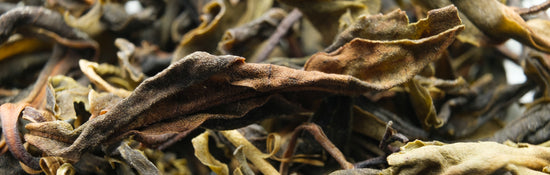
Mò Yá Green is made using old-style máo chá craftsmanship. The freshly picked leaves are worked by hand over wood-burning heat, with withering, rolling, frying and gradual oxidation taking place through the process. It is a simple, old way of making tea that allows both the freshness of the leaf and a deeper, more transformed character to emerge, perhaps explaining the subtle echoes of raw Pu’er we find in the cup. Intensely refreshing and thirst-quenching, Mò Yá brings to mind stepping into the cool shade of a bamboo forest after a long summer walk and drinking from a mountain stream.
Its naturally low caffeine makes Mò Yá Green particularly suited to those who love the freshness and complexity of fine Green Tea but prefer a gentler cup, whether later in the day, during meditation, or simply as part of reducing their caffeine intake.
桃李不言,下自成蹊。
The peach and plum trees do not speak, yet a path forms beneath them.
Recorded by Sima Qian more than two thousand years ago, this old Chinese saying has stayed with us throughout the story of Mò Yá. Something of its meaning can be found in the name itself: 默芽, Mò Yá, Silent Bud — a tea that remained quietly within this forest until years of observation gradually brought its remarkable nature to light.
Our friend Hai You and the tea master have worked together for many years, making some of China's most treasured teas for formal occasions and private collections. Through years of walking this forest, harvesting its leaves and making tea together, they began to notice that certain trees were different.
That observation has grown into ongoing research. Tree by tree, Hai You is identifying those naturally low in caffeine, recording their characteristics and gradually mapping them across the forest. What we are learning is significant not only for Mò Yá, but for our understanding of the extraordinary diversity that can still exist within tea. This is a naturally occurring population that has never been selected or cultivated for low caffeine; it has simply evolved here.
Our first Mò Yá harvest became Red Tea. Later this year, we returned to the same forest to explore what else they might reveal. Mò Yá Green marks the next step in that journey, and a deeper exploration of the possibilities held within this remarkable population of tea trees.
We have chosen not to disclose the precise location of the forest, nor the name of the tea master. Over many years in tea, we have seen how quickly places can change when their commercial potential attracts excessive harvesting, speculation or exploitation. Our intention is not to create secrecy around Mò Yá, but simply to share what we have found without directing unnecessary pressure towards the forest itself.
Sharing the tea, however, is important. China's market for exceptional, traditionally crafted teas has changed dramatically in recent years. As demand from hospitality and gifting has declined, many small-scale makers working with ancient trees and labour-intensive traditional craftsmanship have found it increasingly difficult to receive the recognition and return their work deserves. Beyond income, that recognition matters: it gives makers and communities confidence that the knowledge, persistence and extraordinary effort behind their work still have a place in the world.
This is where we believe Mò Yá can find its own path. By connecting it with tea drinkers and tea houses around the world who understand what makes it exceptional, we hope its value can be recognised without turning the forest itself into a commodity. For us, the arrival of Mò Yá Green makes that possibility even more tangible: the same forest, the same remarkable leaves, and another expression of just how much they have to offer.
Thank you for helping continue this story. Every time Mò Yá is tasted, shared or introduced to someone new, its circle grows a little wider — and so does the recognition reaching the people and place from which it comes.
Taste Profile
Sweet, Fruity, Nutty, and Smooth
Feel
Health Benefits
Season
Indigenous Tree Type
Tree Age
Habitat
Elevation
Cultural Significance
What's so special about this tea?